
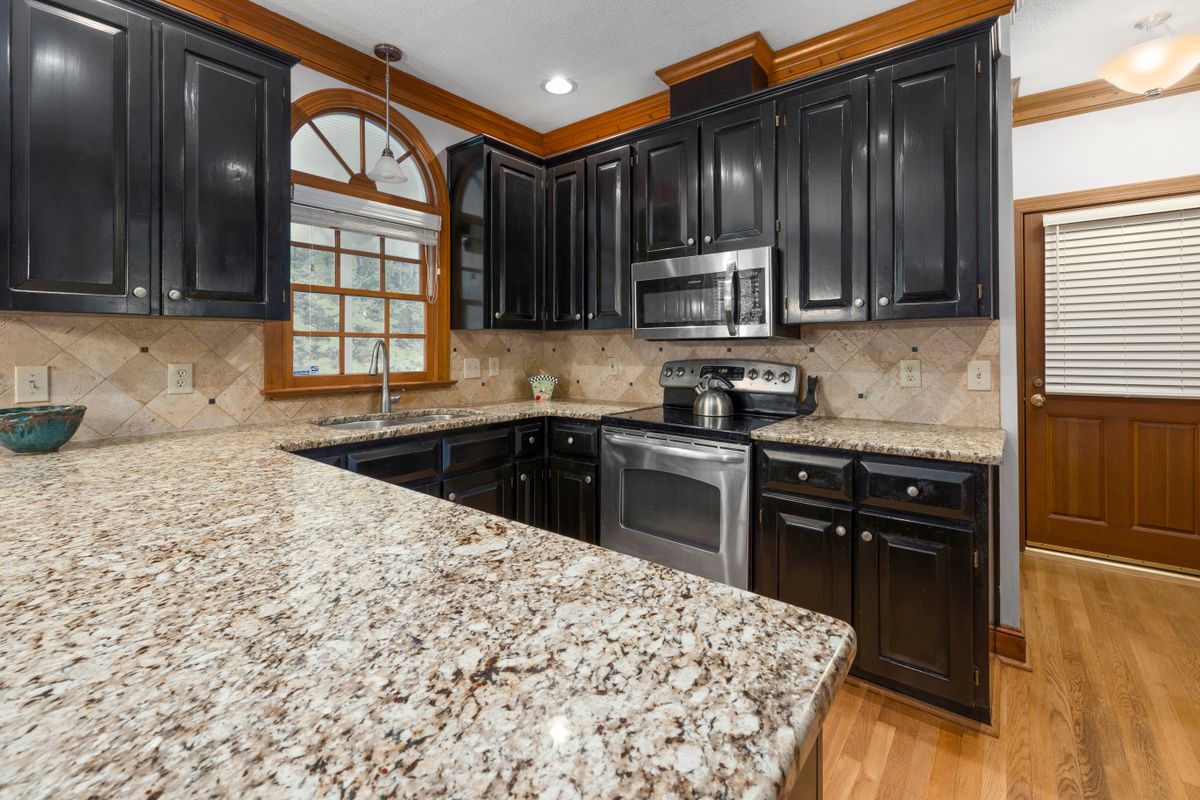
Two materials, one worktop
When choosing a kitchen worktop, most clients end up weighing two options: natural granite and engineered quartz. Both look rugged and both are popular, but their properties differ more than a quick glance suggests.
Composition and hardness
Engineered quartz is a composite — roughly 90–93% ground natural quartz bound with resins and pigments. That gives it a very uniform surface, with a hardness around 7 on the Mohs scale. Granite is fully natural, and its hardness varies with mineral content: quartz inclusions can reach 7, feldspar sits around 6, while mica veins can be as soft as 2–3. In practice, that means a granite surface can scratch a little more unevenly in spots where softer minerals are present.
Heat resistance
This is where granite clearly wins. Natural stone can handle temperatures up to 650°C, while the resins in engineered quartz start to degrade around 150°C — a hot pan set directly on the surface can leave permanent discoloration or even a crack.
Maintenance and porosity
Granite is porous and typically needs resealing every 1–2 years to prevent staining. Engineered quartz is non-porous and never needs sealing, which makes day-to-day upkeep simpler, especially in a busy kitchen.
Appearance
Every granite slab is unique, with its own pattern and veining. Engineered quartz offers a very uniform, repeatable look and color range — including pure whites that are practically impossible to find in natural granite.
Fabrication safety
Cutting and grinding engineered quartz releases crystalline silica dust, so reputable fabricators use wet-cutting methods and proper ventilation to protect workers. That's a fabrication concern rather than a risk in your finished kitchen, but it's worth choosing a supplier who follows these standards.
Quick comparison
| Granite | Engineered Quartz | |
|---|---|---|
| Heat resistance | Very high | Moderate |
| Porosity | Needs sealing | No sealing needed |
| Look | Unique | Uniform, wide color range |
| Best for | Kitchens, outdoor fireplaces, grills | Indoor kitchens wanting low upkeep |
Our recommendation
If hot pans regularly land directly on the surface, or you're planning an outdoor kitchen or fireplace surround, granite is the safer choice. If minimal maintenance and a consistent look matter most, engineered quartz is an excellent fit.
Get in touch for a tailored quote and samples of both materials.